What it is, and what it isn't
What happens at a geisha show
What happens at a one-hour geisha show in Kyoto: two short dances, questions, photographs and a game with a maiko or geiko, and what it is not.
Book the one-hour geisha show ↗Quick answer
A maiko or geiko performs two traditional dances of about five minutes each. A guide then interprets while you ask her questions, take photographs and play a traditional Japanese game with her. It is not an hour of continuous dance: the organiser says the maiko will not perform for the whole hour, because performances are kept short on purpose.
What it is, and what it isn't
Read this part before you book, because it is where visitors' expectations and the format part ways. The show is a one-hour appointment built around two short dances. It is a talk-and-photograph session with a performer, not a stage production, a banquet or a walking tour of Gion. The list below sets out each point plainly, using the organiser's own description of the format and what reviewers say about it.
- It is: two dances of about five minutes each, questions, photographs and a game.
- It is: a performer who is a maiko or a geiko, depending on the day.
- It isn't: an hour of continuous dancing. The organiser says it will not be.
- It isn't: a small-group show. The rooms hold up to 23 and up to 40 guests.
- It isn't: a private teahouse banquet.
Arriving: socks, a phone number and the room
Wear socks or bring a pair. Guests who arrive without them must buy socks at the venue to go in, and bare feet are not allowed. When you book, give a phone number that works in Japan and on WhatsApp, because the organiser uses it to contact you before the show. Travel agents should enter the guest's number, not the agency's. Where you meet varies by option, and the booking page names the spot. One reviewer found the venue a bit hard to reach and advises allowing plenty of time.
The two dances
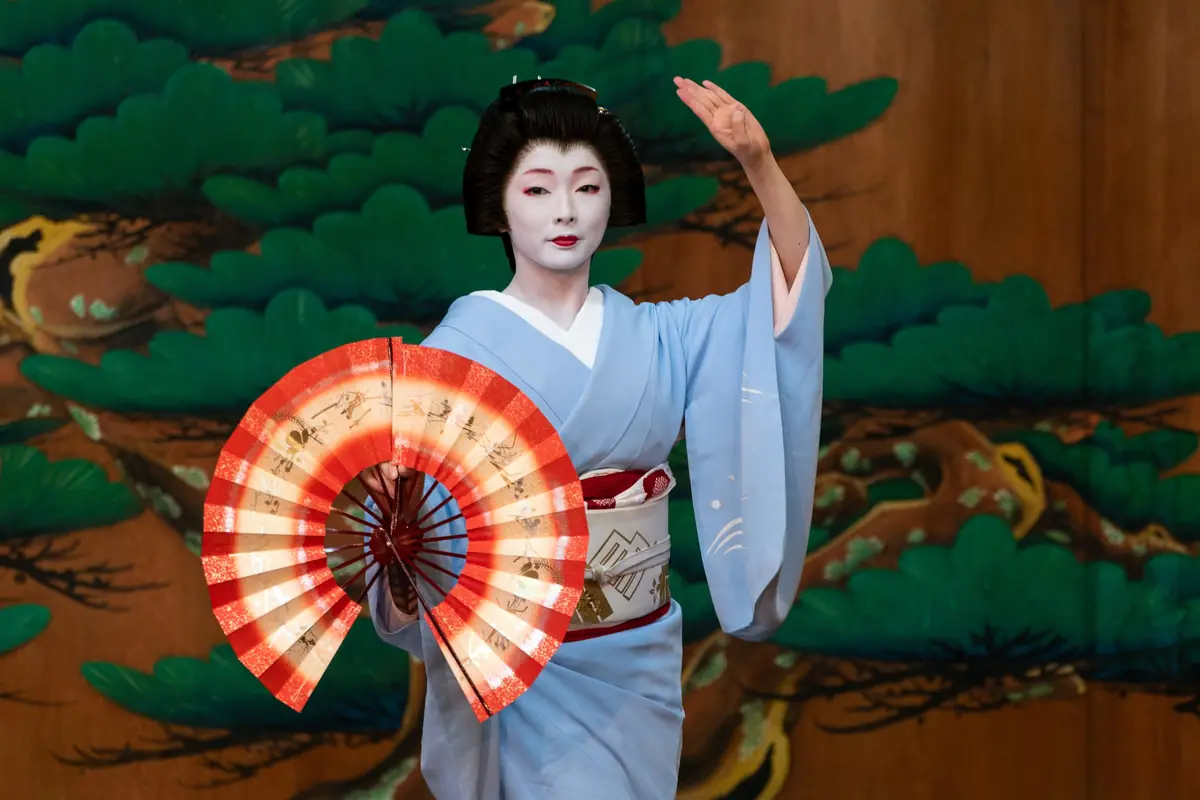
The organiser says the maiko or geiko opens with a traditional dance, and that after two dances of about five minutes each there is time for questions. That is roughly ten minutes of dancing in all, which the organiser calls the usual length of most maiko performances. For scale, Wikipedia says a dance at the spring Miyako Odori may involve 32 maiko and geiko with 20 musicians. The show is a different thing: close, short and conversational.
Why the dances are short
The organiser's explanation is that in geisha and maiko culture performances are intentionally short, to preserve the art's exclusivity and grace. Whatever you make of that, the practical result is clear. You are not paying for volume of dance. You are paying to be in a room with a maiko or geiko, to see two dances up close and to hear her answer questions. Some reviewers say the dances feel brief and wish for more performance time.
Questions, with a guide interpreting
A live guide who speaks English and Japanese interprets while you ask the maiko or geiko about her life. Reviewers single out clear translations and friendly staff, and one notes you have time to ask questions, play a game and watch two dances. Wikipedia gives good prompts: a maiko's day starts with lessons in traditional arts and moves to evenings at teahouses, her training runs several years, and her hair is restyled weekly, so she sleeps on a raised wooden pillow. Ask how long she has trained, what a normal day holds and what she is learning now.
Photographs and a game
The highlights say you are welcome to take pictures and videos, and the show includes a chance to play a traditional Japanese game with her. Wikipedia lists traditional games among the things maiko learn, so the game is part of the craft and not a gimmick. Reviewers describe it as fun and hands-on, and one says the maiko allowed participants to play a traditional game with her. Keep your questions and phone ready, because the order of questions, photographs and the game can vary. Out on Gion's streets the rules change, so read the photography guide before you use a camera there.
Read next: Photographing geisha in Gion
The tea house and its shrine session
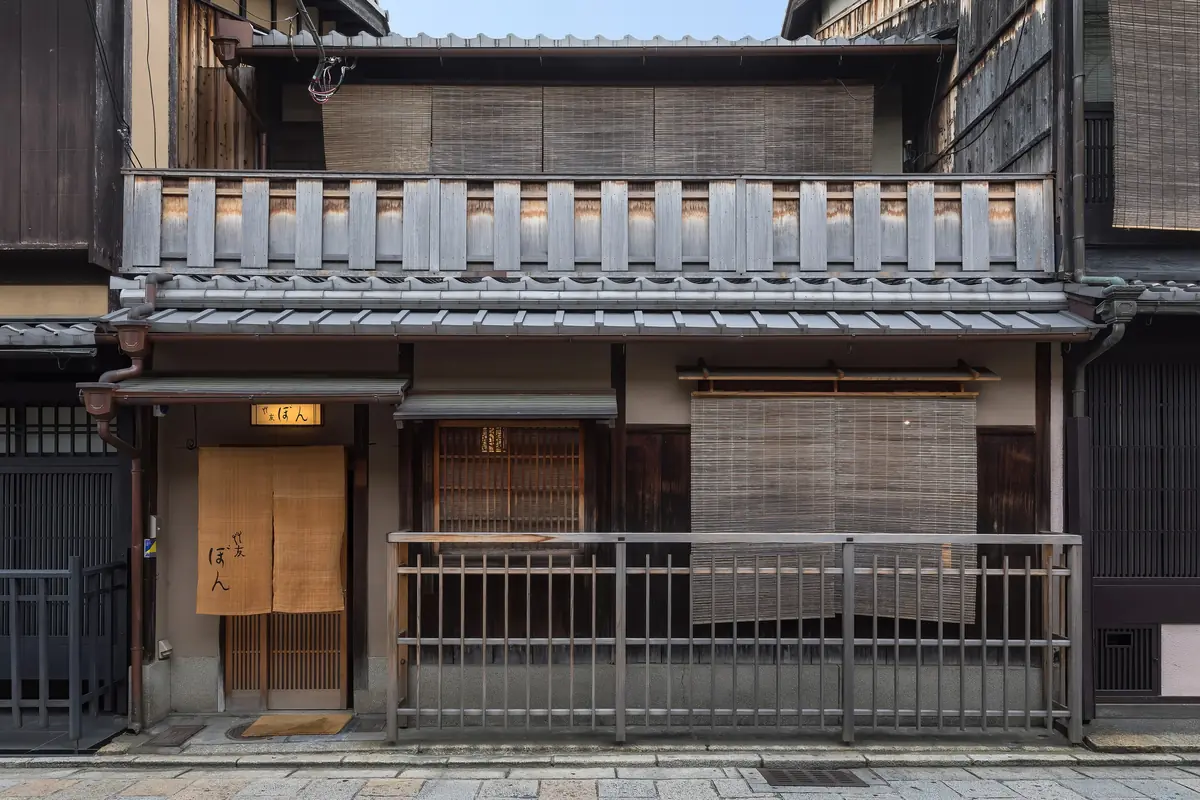
The tea house option is held in a kyo-machiya for up to 23 guests, and it adds an optional 30-minute session at Kitano Tenmangū shrine with a maiko. The organiser says the shrine visit is only for the tea house option, and the tea house is not wheelchair accessible. Wikipedia says maiko originated from women who served tea and dango to visitors at Kitano Tenmangū or Yasaka Shrine about 300 years ago, which makes the shrine a fitting place for this part.
Read next: Kitano Tenmangū and its maiko
The Gion Theater option
The Gion Theater option is a showhouse for up to 40 guests and has no shrine session. It is wheelchair accessible. The organiser says the two options are different tours and asks guests to check the pictures before booking, so look at both rooms and choose on what you want from the hour. If a smaller room and the shrine matter, choose the tea house. If access or a larger, more theatre-like setting matters, choose the Gion Theater.
What the ticket includes and what to bring
The ticket includes the show, tea and traditional Japanese snacks, and an English-speaking guide. The shrine session comes with the tea house option only, and additional drinks and food are extra. Bring socks, a phone switched on with the number you gave at booking, your confirmation with the start time and meeting spot, and a camera or phone for pictures. Strollers stay outside, and alcohol and drugs stay out of your bag. The organiser lists the ticket as not suitable for people over 95. With GetYourGuide you can cancel a day before and get the full fare back, or hold a date now and pay afterwards.
Is it worth it?
The answer turns on what you want from the hour. If you want to see a maiko or geiko up close and hear her answer questions, the reviews are strongly positive: 4.8 from 651 as of this update. If you want a long performance, the spring dances or a banquet suit better, and the shorter tickets suit a tight evening. Know the format before you book and the hour will make sense. The reviewers who rate it highest are the ones who wanted to talk to a maiko, not the ones who wanted a long performance. Set against the 45-minute meet and greet and the 15-minute museum dance on this site, it is the longest of the three and leaves the most room for questions.
Who this isn't for
Look elsewhere for continuous dance, a large-scale production, a private banquet or a quiet teahouse with only a handful of guests. It also does not suit anyone who cannot wear socks or leave a pram outside, and wheelchair users should choose the Gion Theater option rather than the tea house. A hushed, private room is not on offer either, because the two rooms hold up to 23 and up to 40 guests. If you simply want to see Gion's streets, you can walk them, but remember the rules on photographing anyone you pass.
Frequently asked questions
Does the maiko dance for the full hour?
No. The organiser says the maiko will not perform continuously. Expect two dances of about five minutes each, then questions, photographs and a game.
Do I need socks?
Yes. Wear socks or bring a pair. Guests without them must buy socks at the venue to go in, and bare feet are not allowed.
Can I take photos and video?
Yes, the highlights say you are welcome to take pictures and videos. Ask before photographing any maiko or geiko you meet outside the show.
What is included in the ticket?
The show, tea and traditional Japanese snacks, and an English-speaking guide. The shrine session is included with the tea house option only.
Are strollers allowed?
No. The ticket rules out baby strollers, alcohol, drugs and bare feet.
Is a maiko or a geiko performing?
Either. The organiser says it depends on the day, so the ticket promises neither one specifically.
Sources