The shrine on the tea house option
Kitano Tenmangū and its maiko
Kitano Tenmangū, the Kyoto shrine behind the tea house option's shrine session: its history, its plum festival and its link to maiko and tea.
Book the one-hour geisha show ↗Quick answer
Kitano Tenmangū is a Shinto shrine in Kamigyō ward, first built in 947 for the scholar Sugawara no Michizane. Wikipedia says maiko originated from women serving tea there and at Yasaka Shrine about 300 years ago. The tea house option of this show adds an optional 30-minute session at the shrine with a maiko.
The shrine in brief
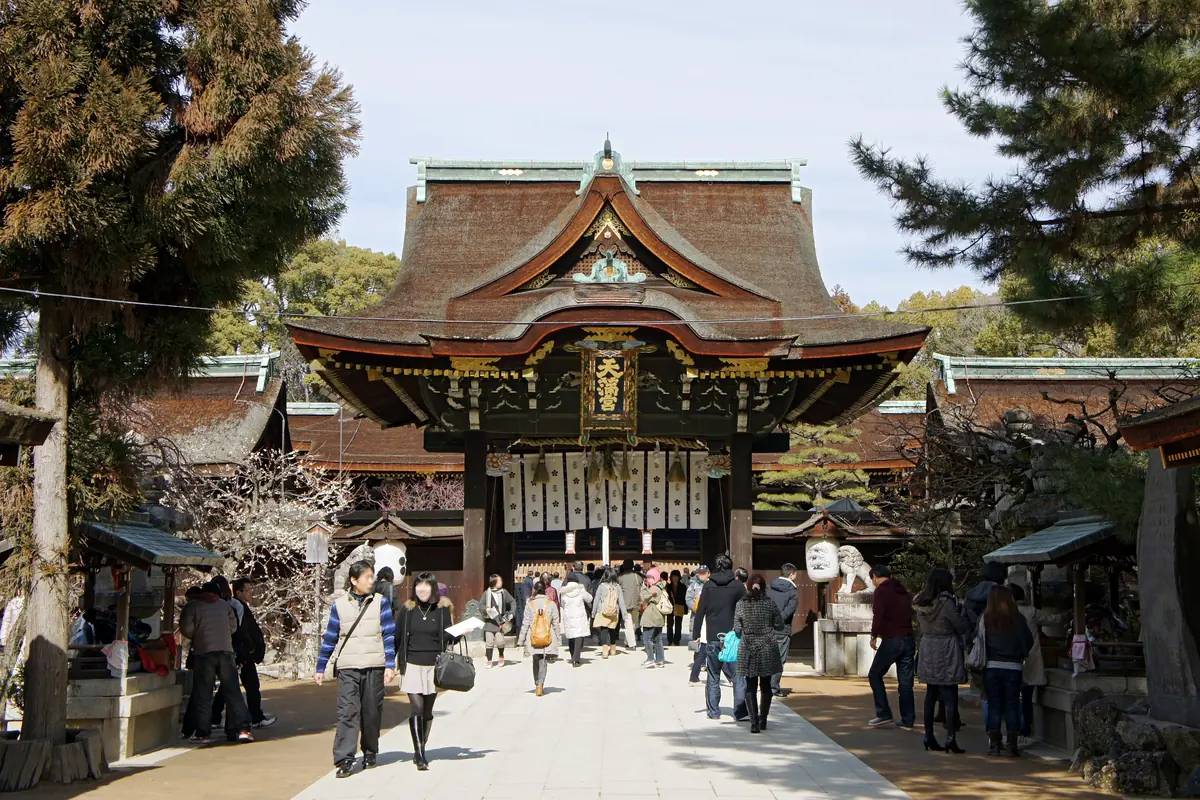
Wikipedia describes Kitano Tenmangū as a Shinto shrine in Kamigyō ward, Kyoto. It says the shrine was first built in 947 to appease the angry spirit of the bureaucrat, scholar and poet Sugawara no Michizane, who had been exiled after political manoeuvres by his enemies in the Fujiwara clan. In 986 Michizane was deified and given the title Tenjin. The shrine became the object of imperial patronage during the early Heian period: in 965 Emperor Murakami ordered messengers sent to report important events to the guardian kami of Japan, and in 991 Emperor Ichijō added Kitano to the list of shrines receiving gifts. From 1871 until 1946 it was among the government-supported shrines.
Plum trees and students
According to Wikipedia, the grounds are filled with Michizane's favourite tree, the red and white plum, and when the trees blossom the shrine is often very crowded. Because Michizane was a man of literature and knowledge, the shrine is popular with students praying for success in exams. On the 25th of every month it hosts a flea market, which with a similar market at the temple Tō-ji inspired a Kyoto proverb about the weather. Whether you visit as part of a tour or on your own, plan for a busy site in plum season.
Tea, geiko and maiko at the plum festival
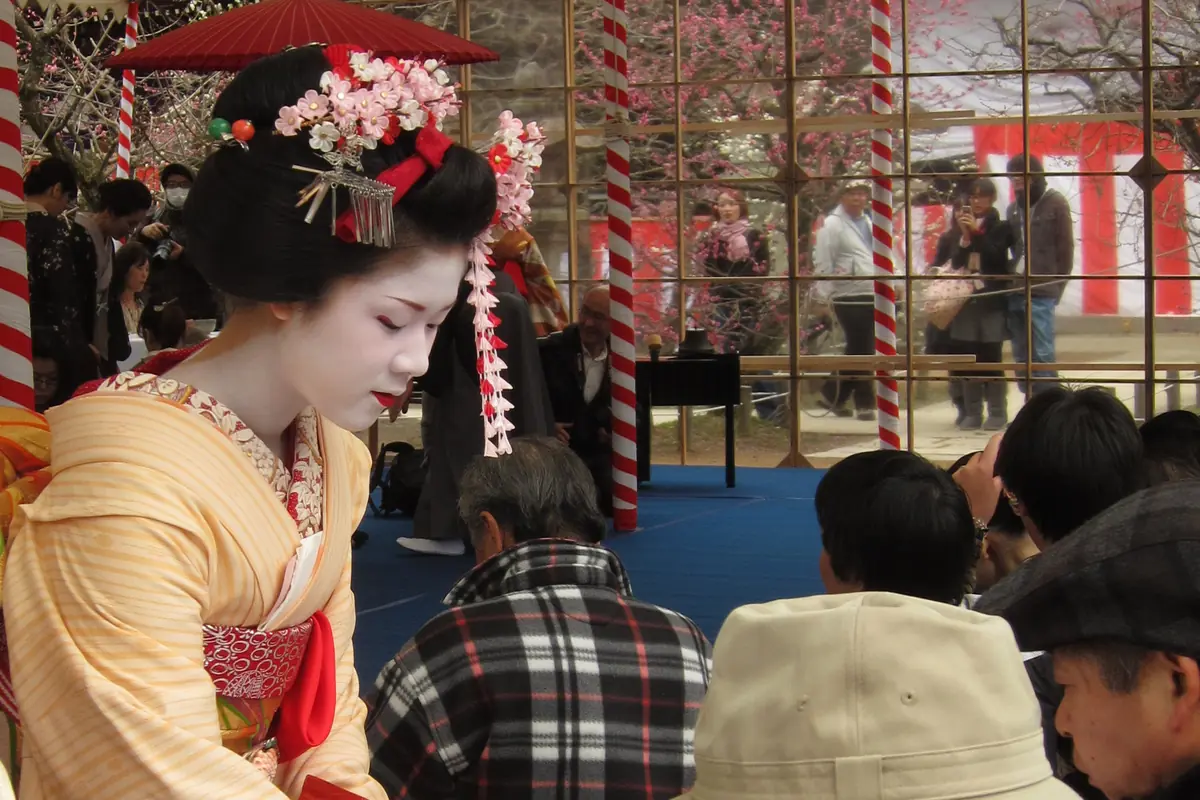
Wikipedia says the Plum Blossom Festival, baikasai, is held on 25 February. An open-air tea ceremony is hosted by geiko and apprentice maiko from the nearby Kamishichiken district, with tea and wagashi served to 3,000 guests. The plum festival has been held on the same day every year for about 900 years, and the outdoor tea ceremony dates back to 1952, when a big festival marked the 1,050th anniversary of Michizane's death. The ceremony is based on the historic Kitano Ochakai tea ceremony hosted by Toyotomi Hideyoshi.
Where maiko began
The Maiko article on Wikipedia says maiko originated from women who served green tea and dango, rice-flour dumplings, to visitors at Kitano Tenmangū or Yasaka Shrine in teahouses in Kyoto about 300 years ago. It is a short sentence with a long reach: a maiko at this shrine is standing close to the origin of her profession, which makes the shrine session more than a photo stop.
The proverb and the weather
Wikipedia records a Kyoto proverb born of the two markets: fair weather at the Tōji market means rainy weather at the Tenjin market, calling to mind Kyoto's fickle weather. It is a small joke with a practical edge, because the shrine session is part of an itinerary and Kyoto's weather can change. Pack for the day you have booked, check the forecast beforehand and treat the proverb as a reminder that a clear morning promises nothing about the afternoon.
The shrine session on this ticket
The organiser says the tea house option includes a 30-minute Kitano Tenmangū shrine session with a maiko, and that the walking tour that visits the shrine is only for the tea house option. The itinerary marks the shrine guided tour as optional. The Gion Theater option does not include it. Your confirmation and the booking page give the meeting details, and the organiser asks for a phone number that works in Japan and on WhatsApp so it can reach you beforehand.
Who this isn't for
Opening hours, admission details and festival times are left out, beyond the dates Wikipedia states, because shrines change them. It is also not a promise that you will see plum blossom or attend the festival, since the session is a short visit tied to the tea house option and its timing depends on the booking. If the shrine does not interest you, the Gion Theater option gives the same show without it.
Frequently asked questions
Is the shrine visit part of every option?
No. The organiser says the shrine session is only for the tea house option, not the Gion Theater option.
How long is the shrine session?
The organiser describes it as a 30-minute session at Kitano Tenmangū shrine with a maiko, and the itinerary marks it as optional.
Who is Kitano Tenmangū dedicated to?
According to Wikipedia, it is dedicated to Sugawara no Michizane, deified in 986 with the title Tenjin.
When is the plum festival?
Wikipedia says the Plum Blossom Festival is held on 25 February, with an open-air tea ceremony hosted by geiko and maiko from Kamishichiken.
What is the link between maiko and the shrine?
Wikipedia says maiko originated from women serving tea and dango to visitors at Kitano Tenmangū or Yasaka Shrine about 300 years ago.
Sources