Know who you are watching
Maiko or geiko: what differs
Maiko or geiko? How Kyoto's apprentice geisha and fully trained geiko differ in age, training, hair and kimono, and why a show can offer either.
Book the one-hour geisha show ↗Quick answer
A geiko is a Kyoto geisha. A maiko is an apprentice working towards that title, usually aged 15 to 20. She trains in dance, the shamisen and song, wears a longer obi and more hair ornaments, and graduates in a ceremony called erikae. A show can offer either, which is why this ticket says the performer is a maiko or a geiko, depending on the day.
Two words for one profession
Wikipedia explains that geiko is a regional term for geisha used in western Japan, including Kyoto and Kanazawa, and that it means woman of art. Maiko, the most common term for an apprentice, means woman of dance. Outside Kyoto, apprentices have other names, such as hangyoku in Tokyo, and their traditions diverge. So when a Kyoto listing says maiko or geiko it is naming the two stages of the same profession: the apprentice and the graduate.
How long a maiko trains
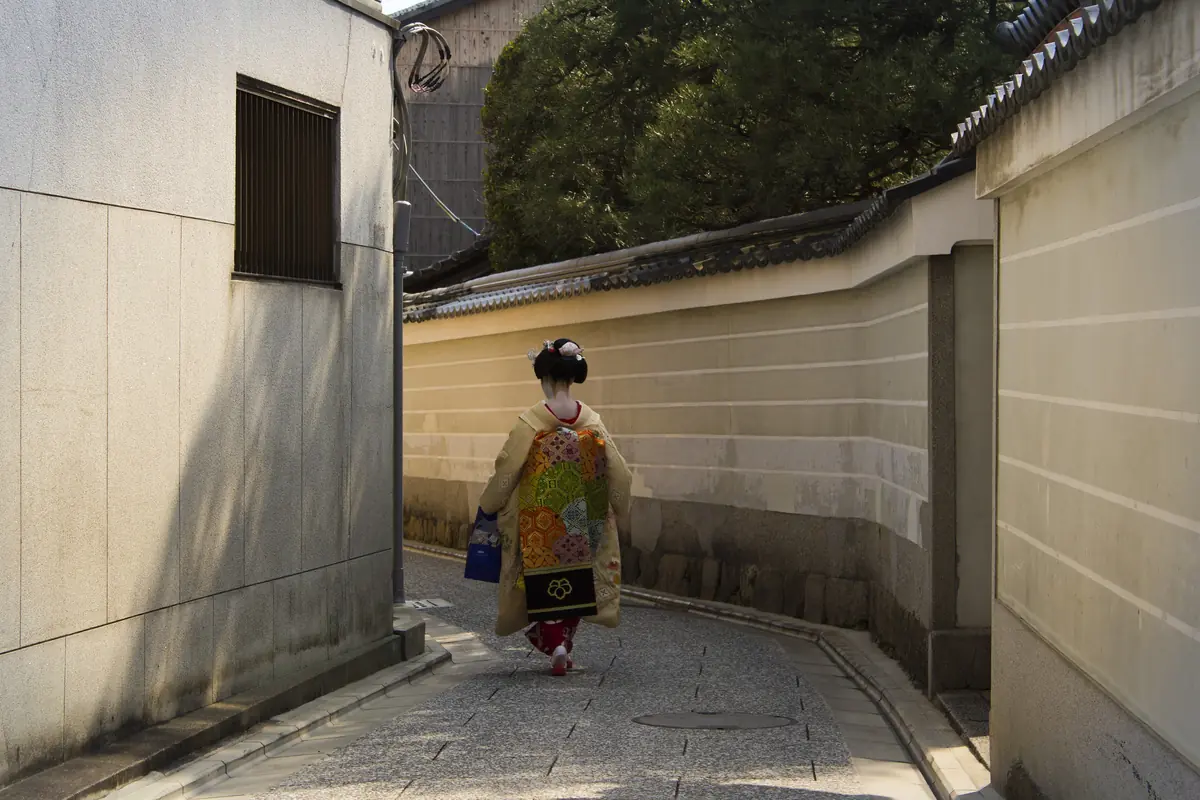
Wikipedia says maiko are usually aged 15 to 20 and train in traditional dance, the shamisen and kouta, and in Kyoto only, the Kyoto dialect. The Geisha article adds that the maiko stage can last between three and five years, after an earlier stage of observing parties as a minarai, and that around the age of 20 or 21 a maiko graduates to geisha status in a ceremony called erikae, the turning of the collar. The Maiko article gives a shorter span, from a few months to a year or two, so treat the years as a range.
What she studies
Wikipedia describes three strands of a maiko's training. The first is formal arts training in a school found in every hanamachi: the shamisen, flute and drums, games, traditional songs, calligraphy, dance, tea ceremony, literature and poetry. The second is entertainment training, learnt by watching her older sister at teahouses and parties. The third is the social skill of navigating the hanamachi. In the morning maiko take lessons, and at night they dance, sing, play the shamisen and serve visitors at teahouses.
Telling them apart by dress
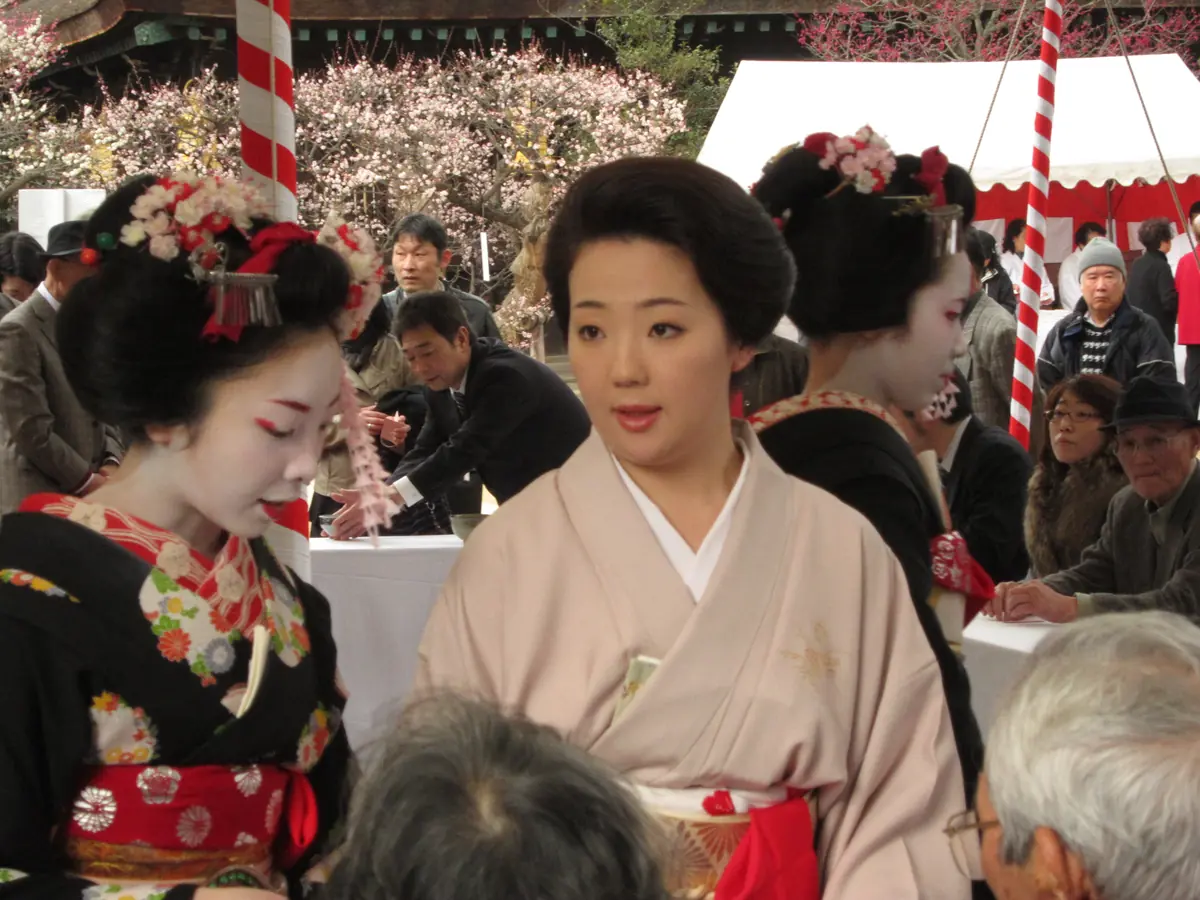
Wikipedia gives several differences. Maiko usually wear a hikizuri, a trailing kimono with long sleeves, tied with the darari obi, 6 to 7 metres long, which is worn exclusively by maiko. Their hair is usually their own, restyled weekly, and decorated with many kanzashi hair ornaments. Geisha wear far fewer kanzashi and, since the war, often wear wigs of the shimada style. These are Wikipedia's descriptions of general practice. Dressed-up visitors can copy parts of the look, so dress alone is not proof.
Why the ticket says maiko or geiko
The organiser says the performer will be a maiko or a geiko, depending on the day. The wording is plain, and it means the ticket cannot promise a maiko. If seeing an apprentice specifically matters to you, treat it as a possibility and not a guarantee. A geiko is a performer who has finished the apprenticeship, so either way the dancer in front of you is a working professional of Kyoto's geisha world.
How many are there
Wikipedia says the number of maiko and geisha in Kyoto fell from 76 and 548 in 1965 to 71 and 202 in 2006. The organiser of this show says only about 40 maiko are left in Kyoto, a figure that is lower than Wikipedia's 2006 count. Wikipedia also notes that more recruits joined after the mid-2000s, many inspired by online documentaries. The point for a visitor is simple: the numbers are small, which is why a booked appearance is how most visitors see one.
Who this isn't for
Nothing here will help you identify anyone on the street. Dress alone is not reliable, and Kyoto Travel asks visitors not to stop or follow geiko or maiko. It also does not rank the districts or say who is better. If you want to see them dance, the show and spring dance guides are the more useful reads, and the photography guide covers what to do when you meet one in Gion.
Frequently asked questions
What is a maiko?
A maiko is an apprentice geisha in Kyoto, usually aged 15 to 20 according to Wikipedia. She trains in dance, the shamisen and song.
What is a geiko?
Geiko is the Kyoto word for a geisha, meaning woman of art. A maiko graduates to geiko after her apprenticeship.
How long does a maiko train?
Wikipedia's articles differ: the Geisha article gives three to five years, the Maiko article a few months to a year or two. Graduation, called erikae, comes around age 20 or 21.
What is the darari obi?
It is the long trailing sash a maiko wears, 6 to 7 metres long according to Wikipedia, and it is worn exclusively by maiko.
Can I choose a maiko or a geiko?
No. The organiser says the performer is a maiko or a geiko depending on the day.
Sources